In the Hamar country of Ethiopia’s Omo Valley, an 18-year-old girl’s private dream collided with bridewealth, polygyny, and a man already twice a husband.
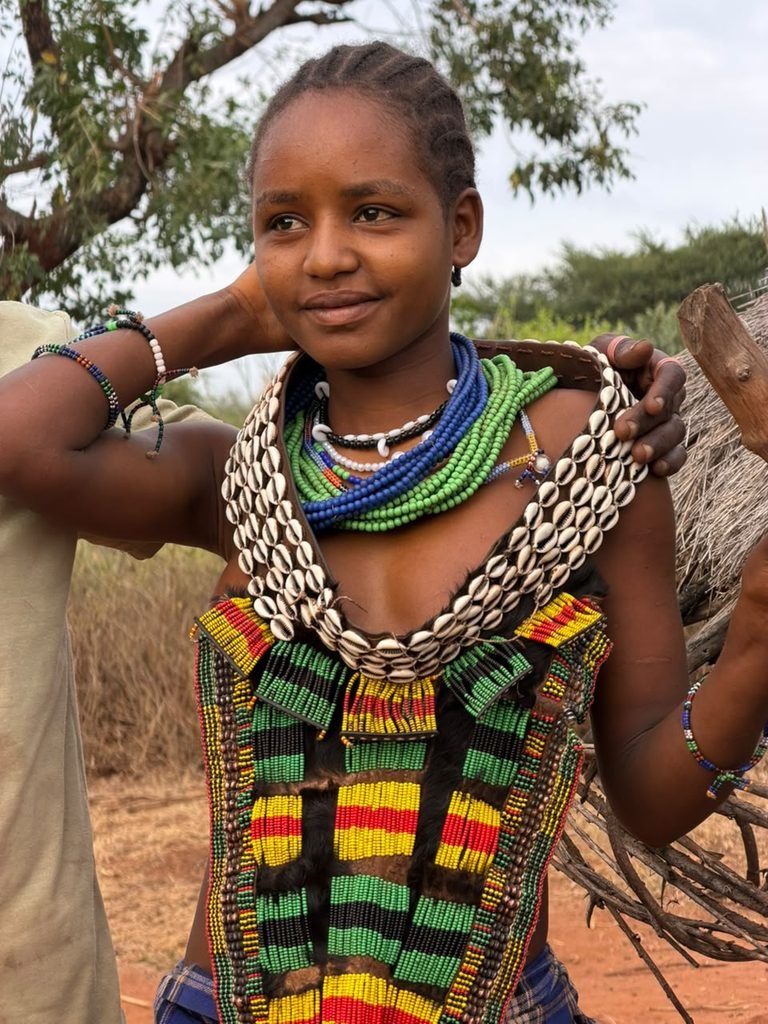
She grew up inside the smell of butter, smoke, and cattle.
Among the Hamar of southern Ethiopia, that is not poetry. It is a childhood. Girls learn the homestead before they learn a map: grinding sorghum, smearing red ochre into braided hair, watching older women lock iron around a bride’s throat and never take it off. She was born there. She was raised there. And like any girl who still had a secret left, she kept one.
She wanted a boy near her own age.
Not a tourist fantasy of “tribal love.” A simple wish. Someone whose voice had not yet gone thin. Someone who still ran with the herds instead of sitting in the shade while younger men did the work. In Hamar country, that wish is allowed in the night dances — girls kick a chosen partner’s leg, eyes meet, talk starts — but the official marriage is rarely the girl’s to sign. Parents decide. Cattle decide. An elder with a herd can decide last.
Her name is not needed here. The pattern is older than her.
Hamar girls commonly move into marriage around seventeen or eighteen. Men often wait longer. A first husband may be in his twenties or thirties, after the bull-jump that turns a boy into a man eligible to marry. A second or third husband can be much older. Community researchers in Hamer have recorded the blunt version of this rule: an old man with resources may marry a young girl, even when the ages sit a lifetime apart. One account from local elders put it without decoration — a man of ninety and a girl of eighteen can be bound if the livestock is there. Field notes add the same picture: when she is the later wife, he is often far older than she is.
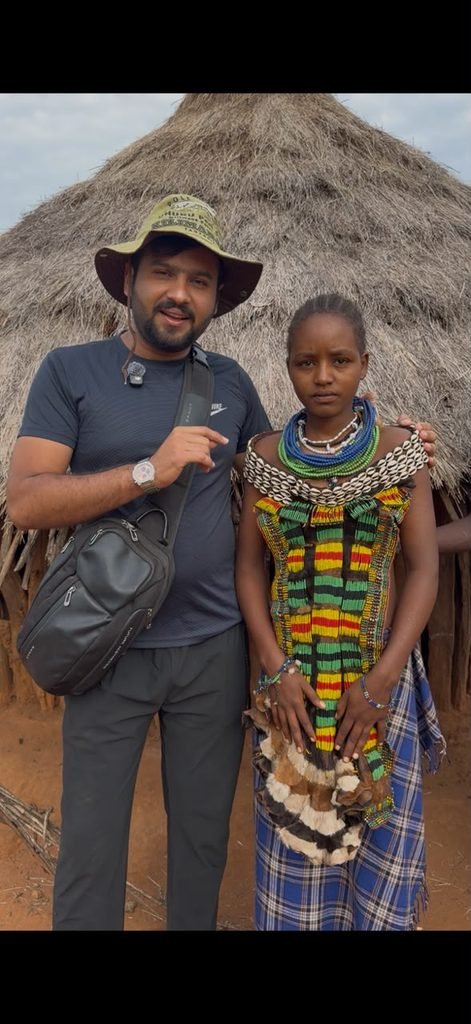
That is the door that opened on her.
One day the elder came to her father’s homestead. Not as a boy with a joke and a dance step. As a man with wives already behind him and a proposal in his mouth. He was 77. He did not come empty-handed. In Hamar life, a man does not win a daughter with speeches. He comes with bridewealth — cattle and goats paid to her family, often in installments, heavy enough that families speak of it like a debt that can last years. The widely recorded measure is close to twenty cattle and thirty goats. A wealthy elder can push the pile higher. In her case the story the homestead told afterward was simple and final: he put forward forty cows. The number landed like a verdict.
Forty cows is not romance.
Forty cows is a future her father can see.
To an outsider, the scene is easy to judge. To a Hamar household, cattle are food, status, alliance, and survival. Daughters carry that weight whether they asked for it or not. A man who can still pay may take three wives, sometimes four. Women marry one man. If he can afford the herd, the third marriage is not a scandal. It is a completed transaction.
She had imagined a boy who would still be learning how to be a husband.
What arrived was a man who had already finished two marriages and wanted a third.
The dream did not shatter in one cinematic scream. That is the crueler version. It broke in pieces. First the visit. Then the talk among men. Then the animals counted. Then the understanding that her “no” was not the voice the homestead was built to hear. Hamar girls are not the ones who send the go-between. Fathers and older brothers find the girl. After the butter-rubbing rite that marks a couple as married, the promise is no longer private. She is no longer only her mother’s daughter. She is becoming someone’s wife.
When the last of the payment that mattered had been accepted, she left.
A Hamar bride does not drift into a new life. She is walked out of one. There is a farewell at her father’s place. Songs tell her how to be a wife and also admit the loss — the parents who will no longer see her sweep the compound in the morning. Then she goes to the husband’s homestead. First wives and later wives do not live inside a Western idea of “the couple.” They live inside a compound, work, children, cattle, and rank. A first wife’s necklace can show her standing. Additional rings can mark the wives who came after. She became the third. Eighteen years old. Living with a man of 77.
What does that life look like after the cameras leave?
It looks like labor. Fetching water. Sorghum. Smoke in the hair. The heavy metal that stays on whether she sleeps or cooks. It looks like a house that already had women in it before she arrived. It looks like a husband who may die long before she is old — because Hamar men are often much older than their wives, and widow-headed households are common. One oft-cited count found 27 of 39 married women already widows. That statistic is not comfort. It is the shape of the road in front of her.
People will want a single emotion from her: rage, or surrender, or secret love. Real life in a homestead is rarely that clean. She can miss the boy she never got to choose and still eat the food this marriage puts in the pot. She can hate the age of the man and still understand why her family took the cows. She can be a wife in the eyes of the village and a girl in the quiet of her own head. Those things do not cancel each other. They sit in the same body.
This is the part outsiders skip because it is less shareable than the photograph.
The photograph is easy: an 18-year-old standing beside a 77-year-old. Third wife. Forty cows. The caption writes itself.
The story underneath is heavier. She was not “won” in a contest of charm. She was raised inside a system that measures a daughter against a herd. Her dream was ordinary. A boy with a young face. A life that started at the same hour of the day. What broke that dream was not a sudden curse. It was custom doing what custom does when cattle are wealth and parents hold the gate.
She lives with him now.
The cows have already gone to her family.
The iron is already on her neck.
The boy her age is still out there somewhere, dancing, herding, becoming a man on a timetable that was never used for her.
And that is the real ending — not a rescue, not a wedding-night legend, not a moral printed in someone else’s language. Just a young Hamar woman who grew up wanting a husband who could still run, and who learned, at eighteen, that the herd arrived first.